
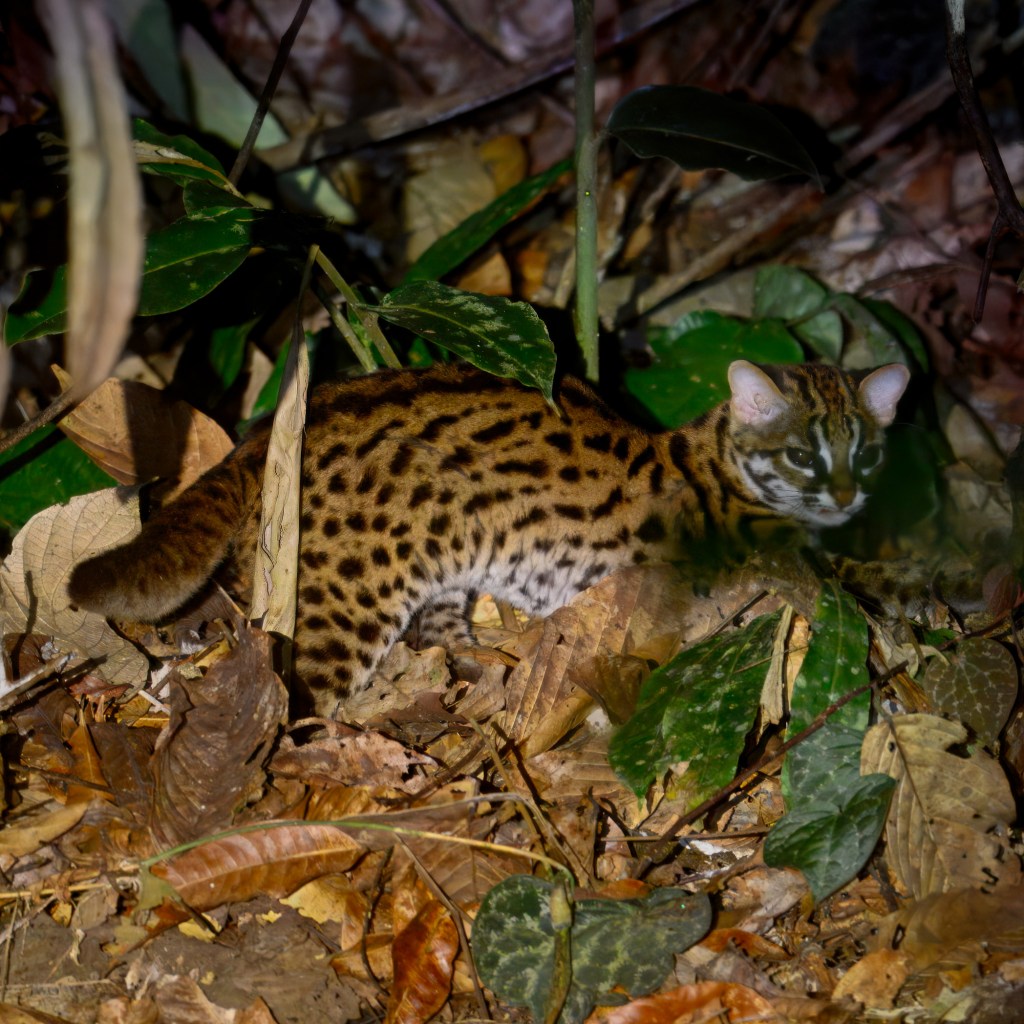
Leopard cats in Borneo are not easy to see. They are small, fully nocturnal, and spend most of their time moving quietly through dense undergrowth. I knew this going in, but I still underestimated how much time and patience it would take to find one in the wild.
I dedicated four nights to searching for them. Each night ran from about 9 p.m. to 1 a.m. The routine was simple. Walk or drive slowly along forest edges, scan the vegetation with a spotlight, look for eye shine, and repeat. The humidity stays high at night, the ground stays wet, and visibility is limited to whatever the beam touches.
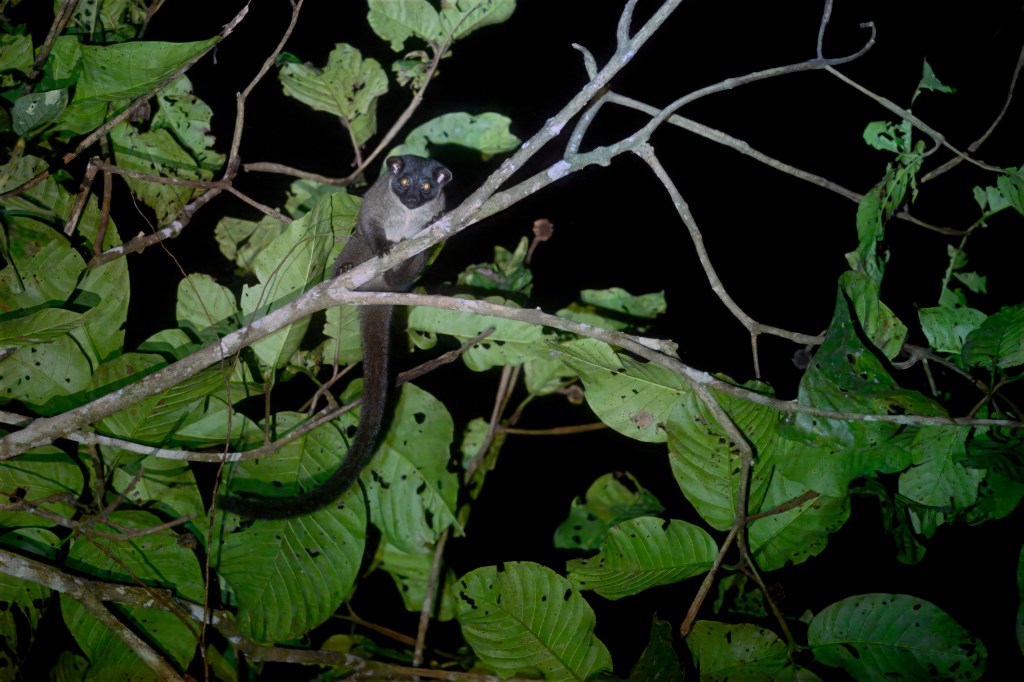
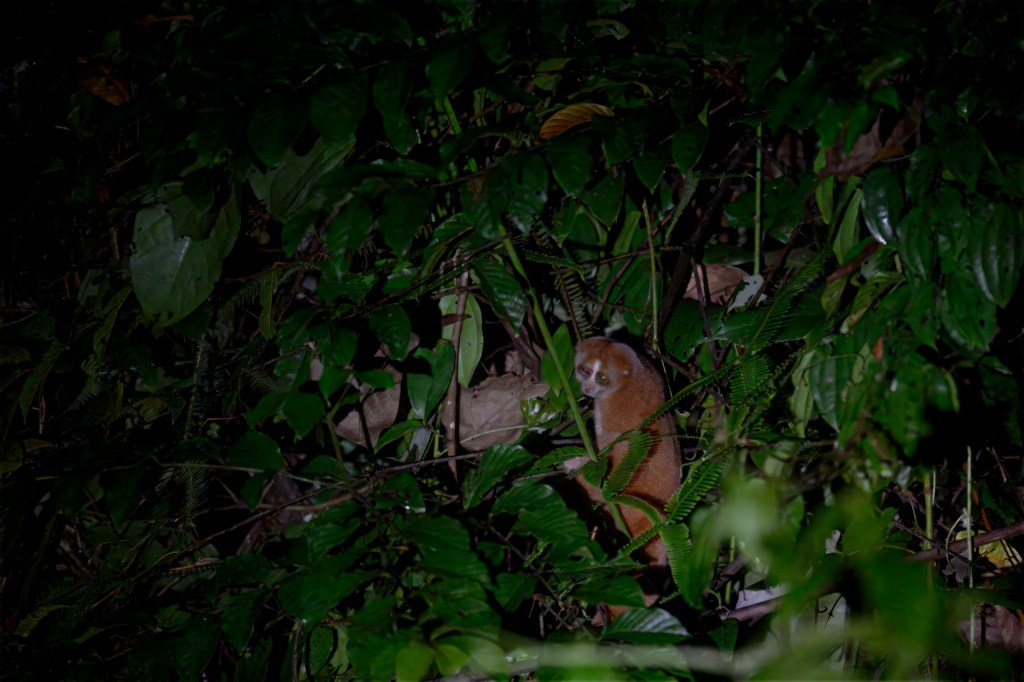
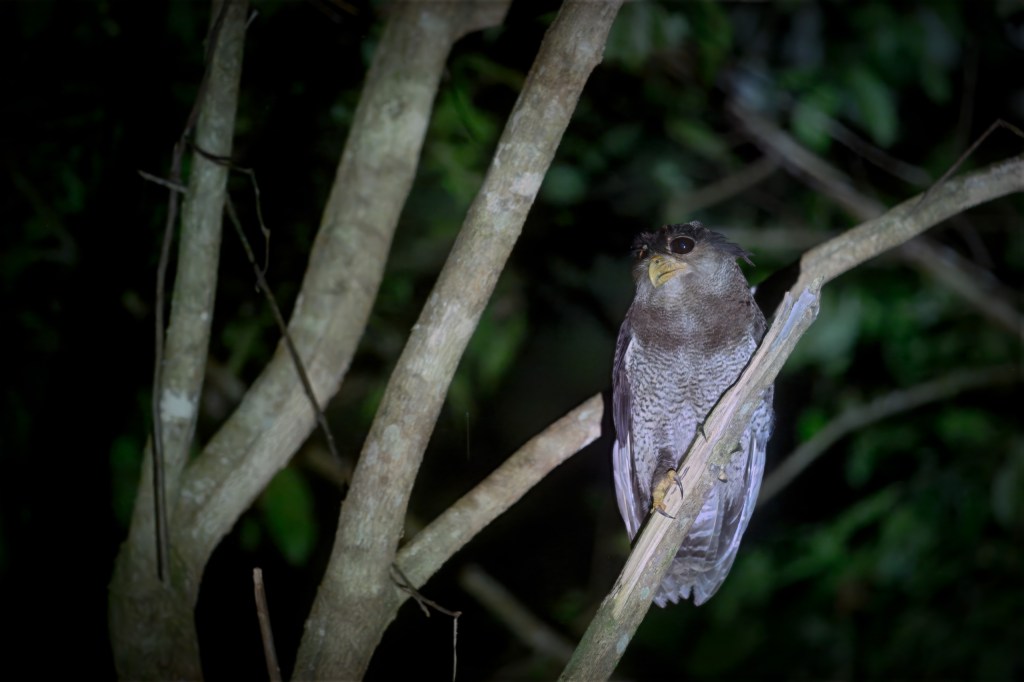
Most nights were filled with sightings of other nocturnal animals. Civets were the most common, usually Asian palm civets or masked palm civets moving through low branches. Red giant flying squirrels showed up regularly, gliding between trees and disappearing into darker sections of the canopy. I saw a few owls, usually perched high and watching quietly from branches. At one point we found a slow loris, which is one of the more unusual nocturnal primates you can encounter. They move slowly and deliberately, and their eye shine is distinct because of how direct and reflective it is. Smaller mammals rustled in the leaf litter close to the road but never revealed themselves completely. These animals were constant reminders that the forest stays active even when the species you are searching for refuses to show itself.
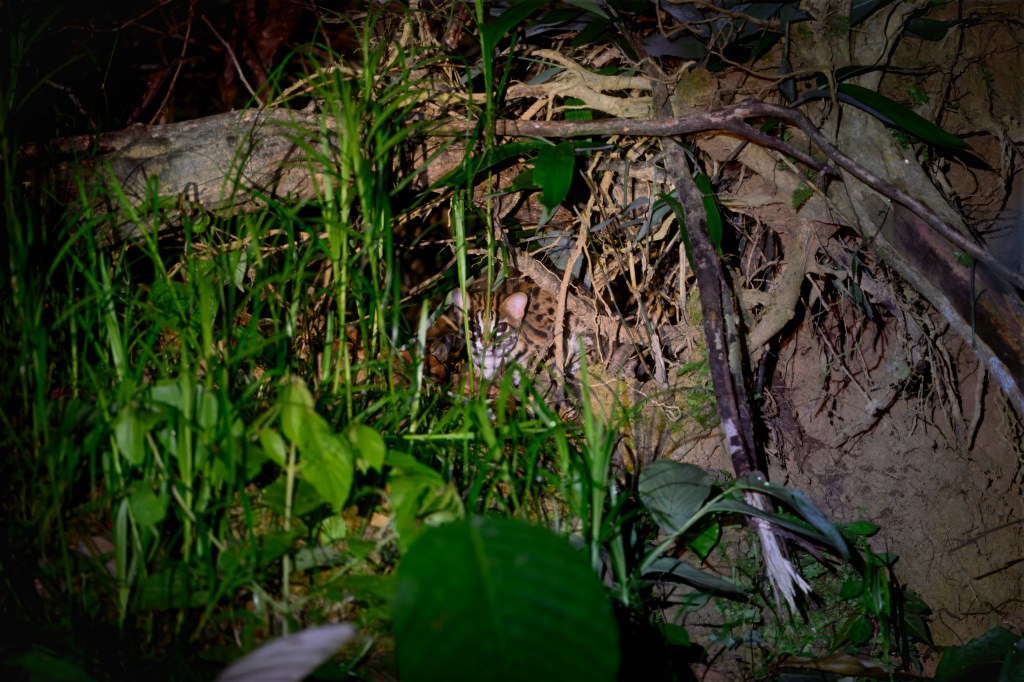
Despite all that activity, leopard cats were still difficult to locate. Their ranges are large for their size, and they move low, fast, and quietly, which makes them easy to miss even when they are close.
On the fourth night, close to midnight, I finally found one. The eye shine was low to the ground and steady. When the light hit the body clearly, the pattern confirmed it immediately. It stayed visible for only a few seconds before slipping back into the vegetation. That was the only sighting I had in four nights of searching.
Leopard cats may be relatively common in Borneo, but “common” does not mean easy to observe. They appear on their schedule, not yours. The only way to improve your odds is to put in the time.
The sighting was brief, but it made the hours feel worthwhile. Nocturnal wildlife work often comes down to long periods of scanning followed by a few seconds you remember. The leopard cat encounter fit exactly that pattern.
Wildlife Expedition – February 2025
 Wild with Tyler
Leave a comment