
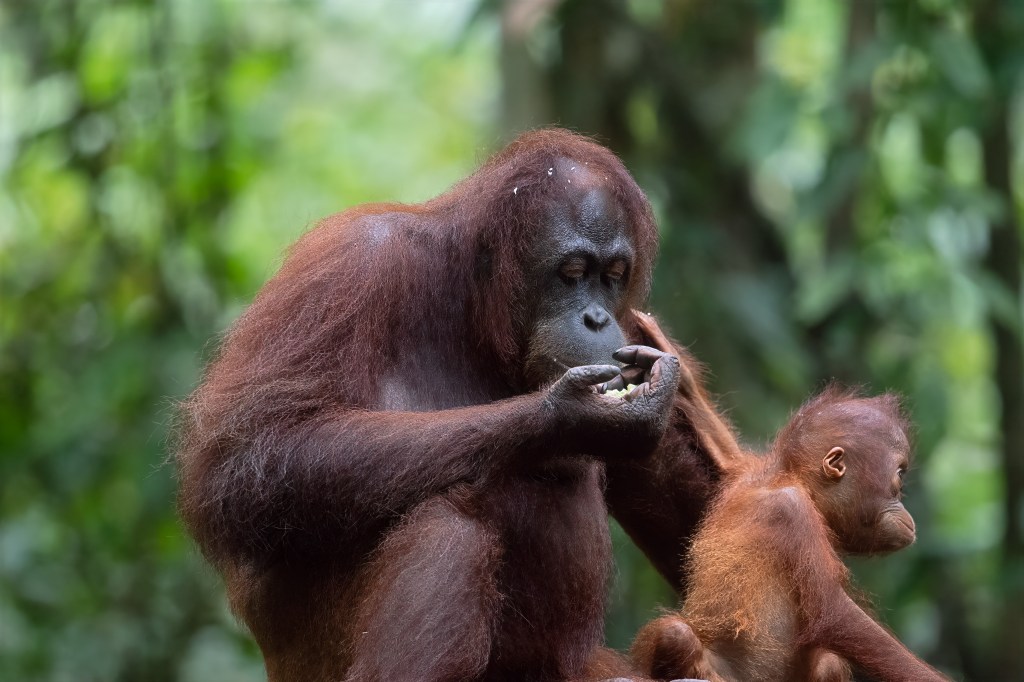
Visiting Borneo to see wild orangutans is very different from a typical wildlife trip. There are no easy viewpoints, no drives, and no convenient distances. The only way to find them is to hike into the forest and hope the timing works out.
In my case, it meant hiking a couple of miles through thick humidity and temperatures that climb quickly even early in the day. Every step feels heavier than it should because the air never really cools down. Even slow walking turns into a sweat-soaked effort almost immediately. The forest floor is uneven, muddy in places, and full of roots that grab your boots. Progress is steady but slow, and you feel the environment the entire time.
When you finally hear branches shifting above you or spot orange fur through the canopy, the heat becomes less important. Malaysian Bornean orangutans are mostly solitary, and they spend about 90 percent of their time in trees. You often see only parts of them at first: an arm reaching for a branch, a juvenile swinging behind a parent, or just the movement of leaves. They build new nests almost every day, usually in the late afternoon, and they travel long distances for fruit. That constant movement means you rarely get long sessions with them unless they decide to stay in one feeding tree.
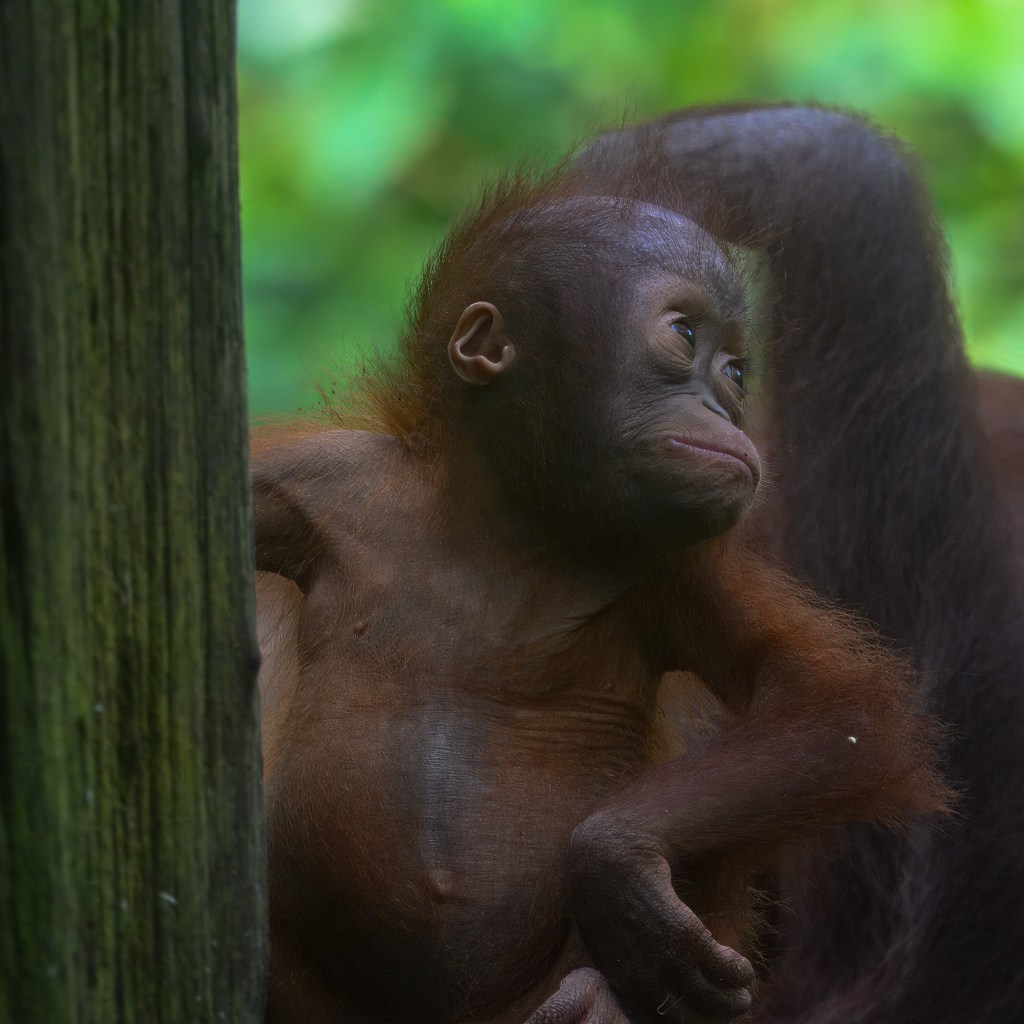
The orangutans in this region belong to the Bornean orangutan species (Pongo pygmaeus), which is split into three subspecies across the island. They are critically endangered due to habitat loss, palm oil expansion, and fragmentation of the forest. Males grow large cheek pads as they mature, and you can hear their long call carry across the forest from far away, which is often the first sign they are nearby. Females have much smaller home ranges and usually travel with a single infant or juvenile.
Most encounters are quiet. You stand still, trying not to rustle leaves or break branches, and watch them move with a level of control and intention that is easy to miss until you see it up close. They use their feet almost the same way they use their hands. They test every branch before committing their weight. They never seem rushed, even when they are covering ground quickly.
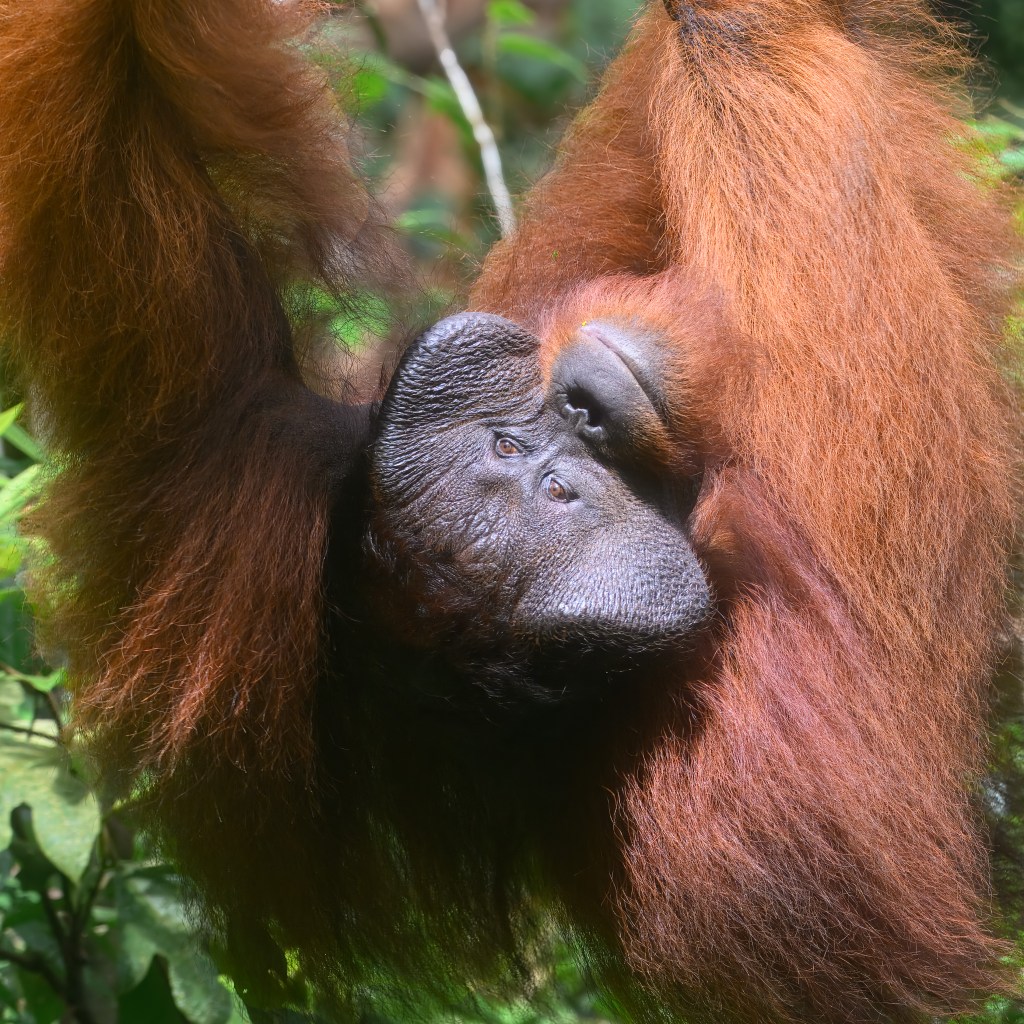
My time in Borneo was mostly spent hiking, sweating, and waiting. There is no shortcut for that. The forest decides how each day goes. Some days you get multiple sightings. Other days you come back with nothing but mosquito bites and a soaked shirt. But the moments when an orangutan stops, looks down through the canopy, and acknowledges your presence for even a second make the entire effort worthwhile.
It is a simple experience on paper. Walk, search, observe. But it also feels like one of the most respectful ways to see wildlife. You enter their world on their terms, and if they allow you a glimpse, you take it as it is.
Wildlife Expedition – February 2025
 Wild with Tyler
Leave a comment